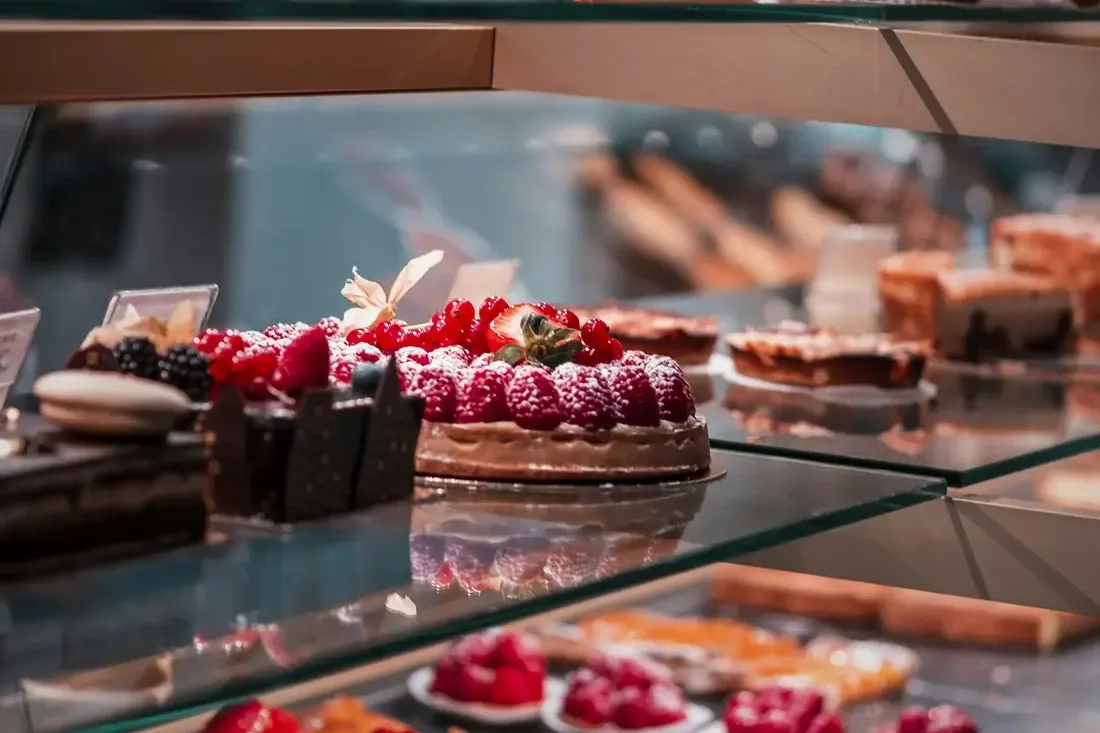
A pastry in the case should look the same at eight in the morning and at six in the evening. That takes temperature, humidity and light working together.
A patisserie case is more demanding than a drinks display. Cream needs steady cold, sponge and chocolate do not tolerate humidity and draughts, and all of it is in full view of customers.
A served-over case opens from the back and the customer sees the goods through glass. It holds temperature best. A self-service case has doors or an open front. It sells faster, but loses more cold and needs more capacity.
A common combination is a refrigerated section for pastries and an unrefrigerated section for bakery goods and long-life items in one counter.
Not everything belongs at the same temperature. Cream pastries need cold, while chocolate pralines in the same case turn grey and collect moisture. The temperature regime follows the goods and the site's own rules (HACCP). That decides whether one case is enough or two zones are needed.
Tell us what will go in the case and how much space you have. Send your enquiry here.
When to call for service at once and what to expect from a visit.
Commercial refrigerationStatic or ventilated cooling, plug-in or remote condensing unit.
Commercial refrigerationHow they differ from a household fridge and where to put one.