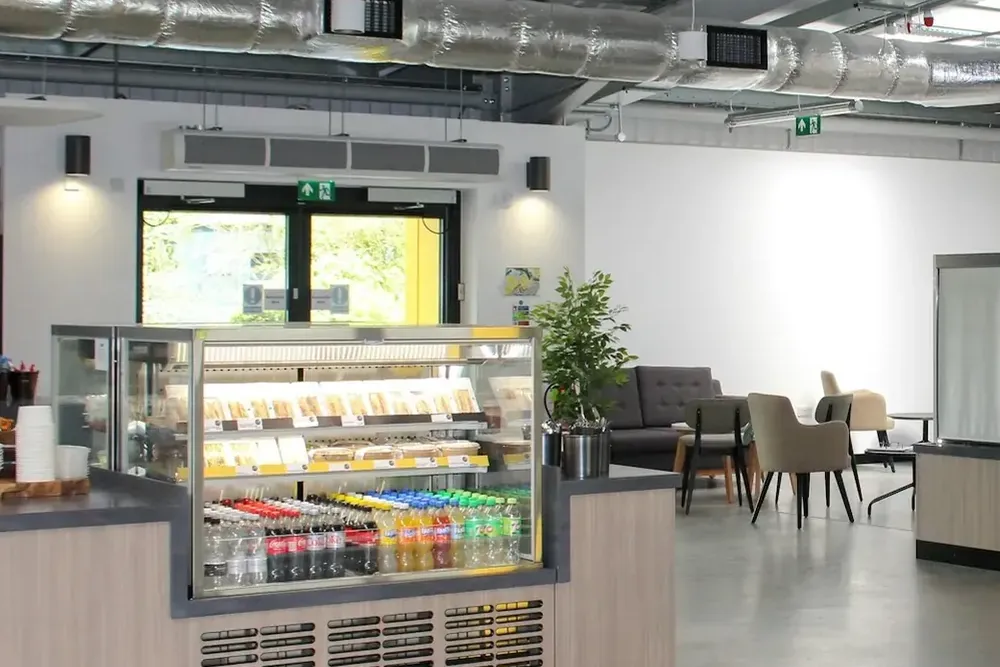
A glass door fridge looks simple. In a business, though, people open it a hundred times a day and it stands next to the coffee machine. It has to be built for that.
A glass door fridge, also called a bottle cooler or display fridge, has to show the goods and keep them cold through frequent opening. A household fridge with a glass door is not built for that.
A plug-in fridge rejects heat into the room, usually at the back or the bottom. It needs clearance as the manufacturer specifies. Built into a niche with no ventilation, it runs non-stop, uses more energy and wears out sooner.
Nearby heat is a problem too: a coffee machine, a dishwasher, an oven or direct sun. So is noise. A fridge nobody notices in a shop can be heard in a quiet café.
Glass doors insulate worse than solid ones. Energy use depends on the glass, the lighting, the door seals and how often the doors are opened. Refrigerating appliances intended for selling goods carry an energy label, which makes them comparable. Where nothing is sold at night, a lighting timer helps.
You can buy and plug in one fridge yourself. When ten are to stand side by side, heat in the shop, power draw and circuit protection become the issue. Refrigeration with a remote condensing unit often works out better then, and that is design and installation work.
Tell us how many fridges you need and where they will stand. Send your enquiry here.
When to call for service at once and what to expect from a visit.
Commercial refrigerationStatic or ventilated cooling, plug-in or remote condensing unit.
Commercial refrigerationDoors or drawers, where the unit sits and what wears counters out.