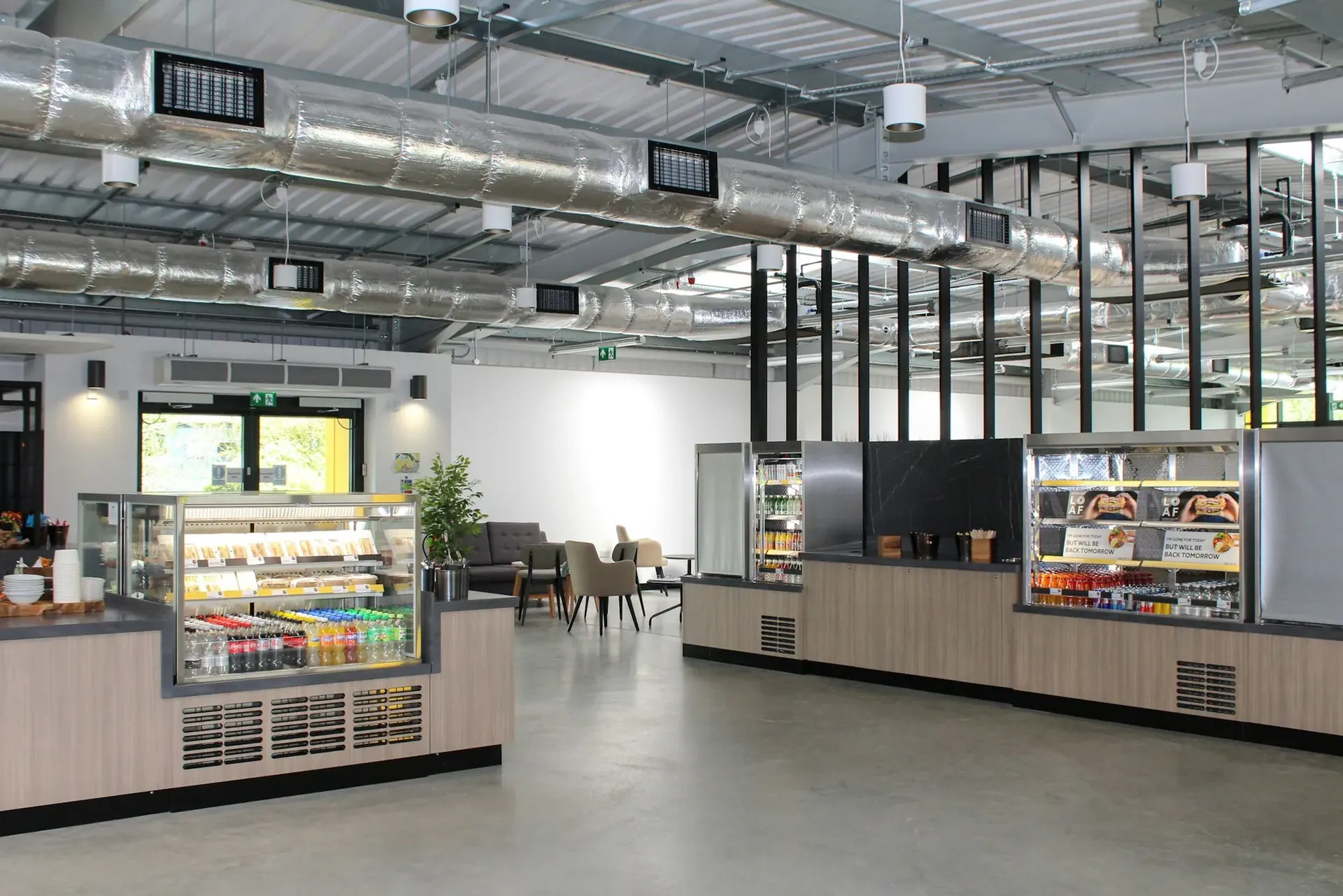
You can buy a plug-in display case online in an afternoon. The work starts where the case has to hold temperature all day, stay clear of condensation and not heat up the shop.
A refrigerated display case sells the goods and protects them at the same time. Both depend on how well it fits the product range and the location, not on how much it cost. Below is what we ask before we recommend or connect one.
A plug-in case is put in place, plugged into a socket and it cools. The heat and noise stay in the shop, however. With one case that is fine. With a row of them, both the air conditioning and the customer notice it in summer.
A remote case has its compressor and condenser elsewhere, typically outdoors or in a plant room. The shop is quieter and cooler, but refrigerant pipework, a condensate drain and power have to be run. That is installation work for a certified refrigeration engineer.
One small plug-in case for a finished space is a purchase, not a project. It makes sense to contact us when you are dealing with several units at once, remote refrigeration, connection to an existing system, a new or rebuilt site, or a case that will not cool despite every effort.
Tell us what you sell and where the case will stand. Send your enquiry here.
When to call for service at once and what to expect from a visit.
Commercial refrigerationTemperature, humidity and condensation in a patisserie case.
Commercial refrigerationHow they differ from a household fridge and where to put one.