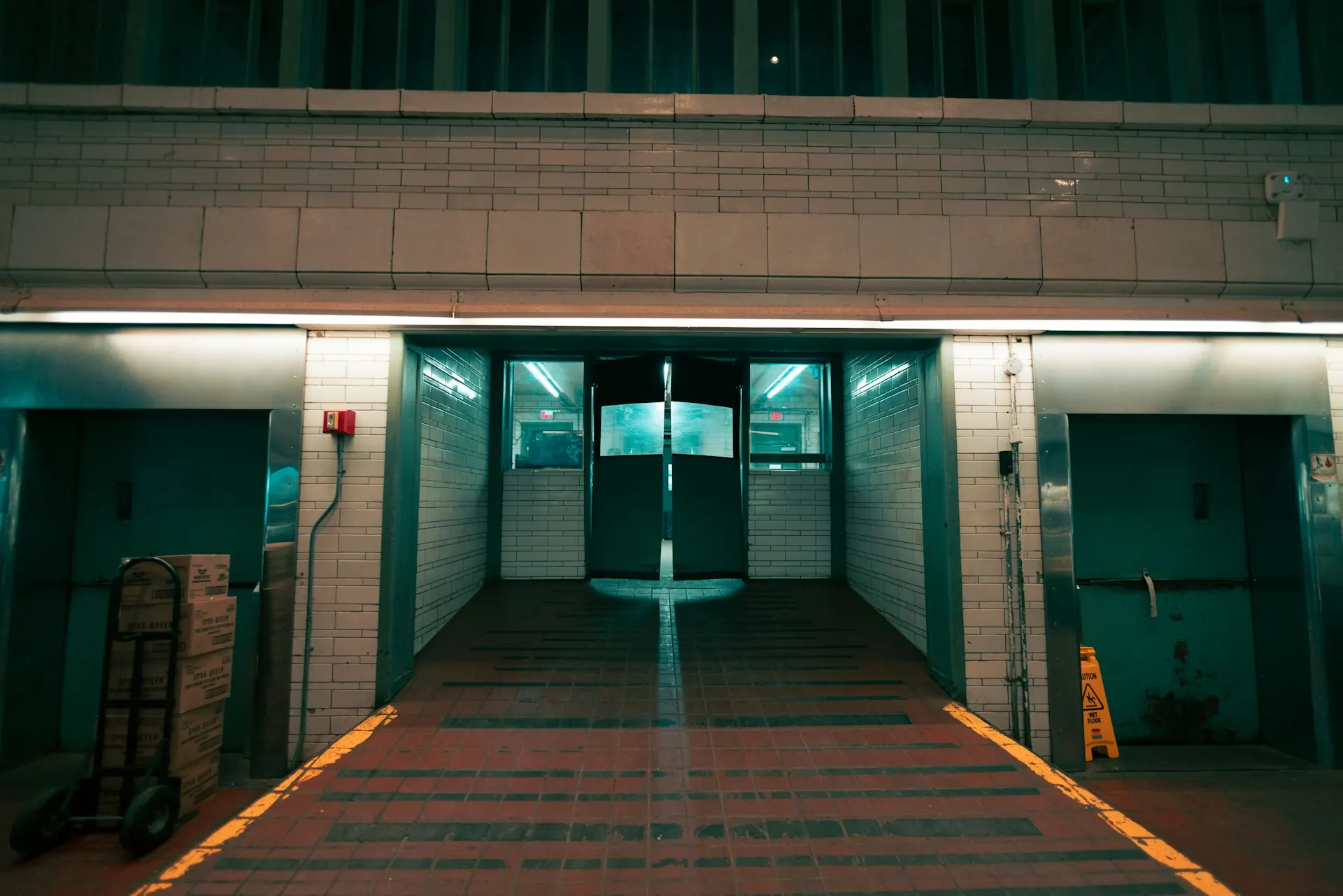
A cold storage warehouse keeps goods above zero, typically between 0 and +8 °C. A freezer warehouse keeps goods below zero, typically between −18 and −25 °C. Today both are most often built from insulated panels inside a new or existing hall. For smaller volumes a cold room or freezer room is enough.
How a freezer warehouse differs from a cold room
- Floor. In a freezer warehouse the floor must be insulated and the ground below protected against frost, by heating or by a ventilated layer. Otherwise the subsoil freezes and lifts the floor. Load capacity is designed for the racking and the trucks.
- Doors and anteroom. Every opening lets in warm, humid air. The moisture freezes on the evaporators, on the floor and around the doors. High-speed doors, air curtains or a chilled anteroom help.
- Defrosting. Evaporators in a freezer warehouse always frost up. Defrosting is designed around how the warehouse is used, otherwise cooling capacity gradually drops.
- Pressure equalisation. Cooling down creates negative pressure inside. Relief valves protect the panels and doors from deformation.
What we need to know before the design
- What goods you store and at what temperature.
- How many pallet positions or what volume you need.
- How much product arrives per day and how warm it is on arrival. Freezing warm product takes far more capacity than holding frozen product.
- How often the doors open and how goods are moved: by hand, by pallet truck or by forklift.
- Which hall the warehouse will stand in and where the plant room and condensers can go.
- What electrical supply is available on site.
Refrigeration plant
A smaller warehouse with one or two rooms is usually cooled by separate condensing units, one circuit per room. A larger warehouse tends to have a central plant room with several compressors. A failure of one compressor then does not stop the warehouse, and the waste heat can be used for hot water or heating.
The choice of refrigerant is now shaped by the rules on F-gases. New larger systems are therefore planned with low-climate-impact or natural refrigerants.
Monitoring and power cuts
- Temperature records. A continuous record is the basis for your own checks and for your customers.
- Alarm. If the temperature is exceeded or a fault occurs, a message goes to a phone, not to whoever opens the warehouse in the morning.
- Safety of people. Doors that open from the inside and an emergency signal for a person left inside the freezer.
- Power cut. How long the warehouse holds temperature, and whether you need a backup supply, is best known before construction, not after the first failure.
What we do
- Design of the warehouse around the goods, the volume and the operation.
- Panel construction including the floor and doors.
- Refrigeration plant, pipework, controls and temperature monitoring.
- Commissioning and operator training.
- Extension and refurbishment of existing freezer and cold storage warehouses.
- Service and leak checks.
Tell us what you store, how many pallets and in what hall. Send your enquiry here.